
Technical guide
Colour temperature — why white isn't always white.
A "white" LED can range from a warm yellow-tinged 2700K to a cool blue-tinged 6500K. The choice affects how a beam reads to the eye, how it performs in fog and snow, and how the human visual system responds at the end of a long shift. This guide explains the spectrum, the trade-offs, and what we ship.
Laatst bijgewerkt 24 april 2026
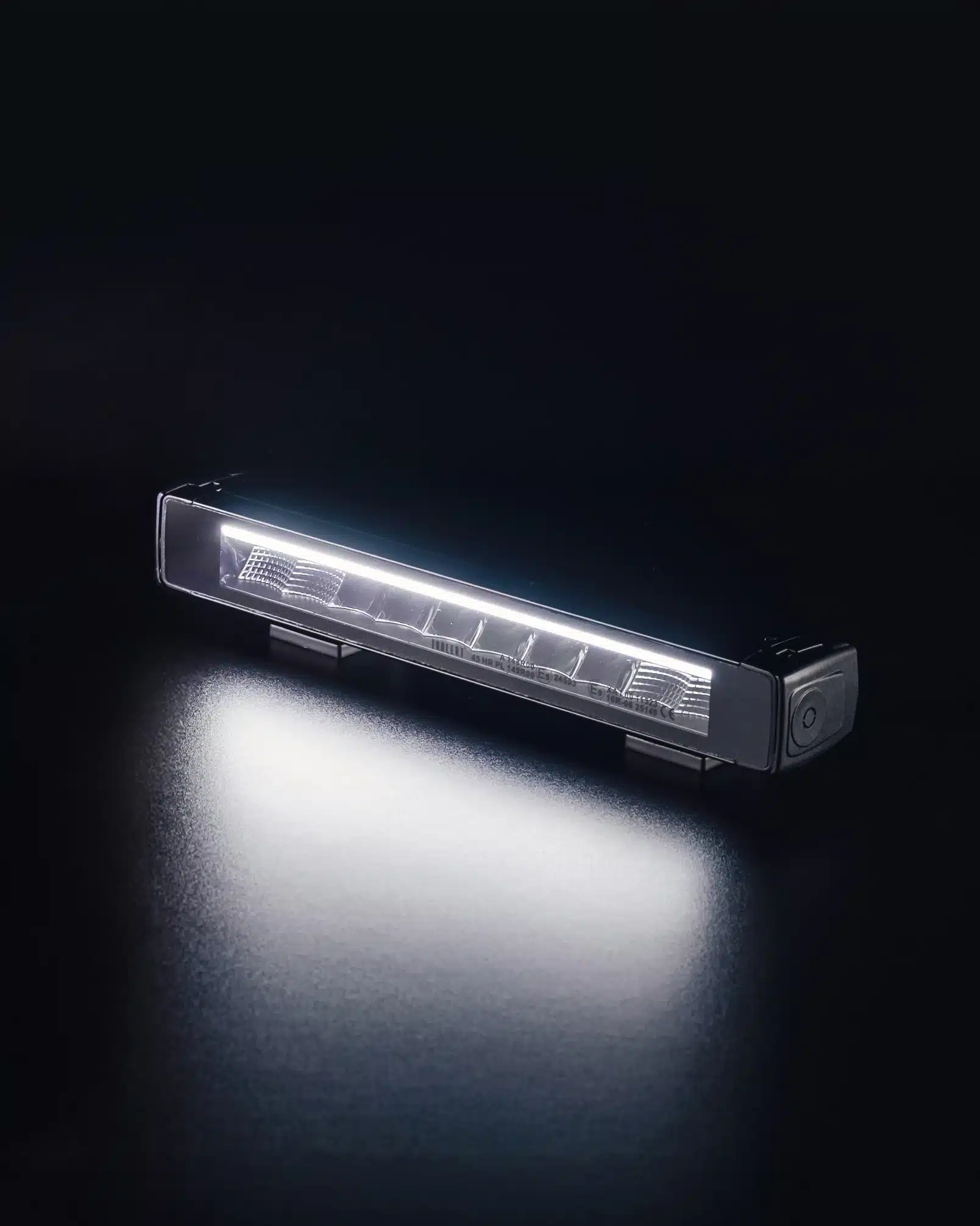
The Kelvin scale, simplified
Colour temperature is measured on the Kelvin (K) scale. The number doesn't represent how "warm" or "cool" the light feels in a casual sense — it represents the temperature at which a theoretical "black-body" radiator would emit that colour of light.
- **2700K** — warm yellow-white (typical incandescent house bulb) - **3500K** — soft warm white - **4000K** — neutral white - **5000K** — daylight-equivalent white - **5700K** — pure cool white (ours) - **6500K** — cold blue-white
Higher numbers = bluer. Lower numbers = yellower. The eye reads warm temperatures as relaxing and cool temperatures as alert / clinical.
Why colour temperature matters on a vehicle
Three practical effects:
**Eye fatigue**. Long-shift drivers fitted with cool-white auxiliary lamps (6000K+) report more headaches and earlier fatigue than drivers with neutral-white (5000K) lamps. The blue end of the spectrum is what the eye uses to track colour and detail; running it hard for 12 hours wears the visual system out.
**Performance in fog and snow**. Cool white reflects off droplets and snow particles more than warm white does — what looks brighter in clear air can blind you in mist. Rally drivers since the 1970s have used yellow (selective-yellow, around 2900K) for this reason. Modern drivers running 6000K+ "ice white" auxiliary lamps in heavy snow are at a disadvantage.
**Compliance**. ECE-approved lamps must hit a defined colour-temperature range. R7 and R148 specify white as 4000K–6500K. R65 specifies amber as a narrow range around 590nm. A "white" lamp at 7000K is technically blue-tinged enough to fail the white test if measured strictly.
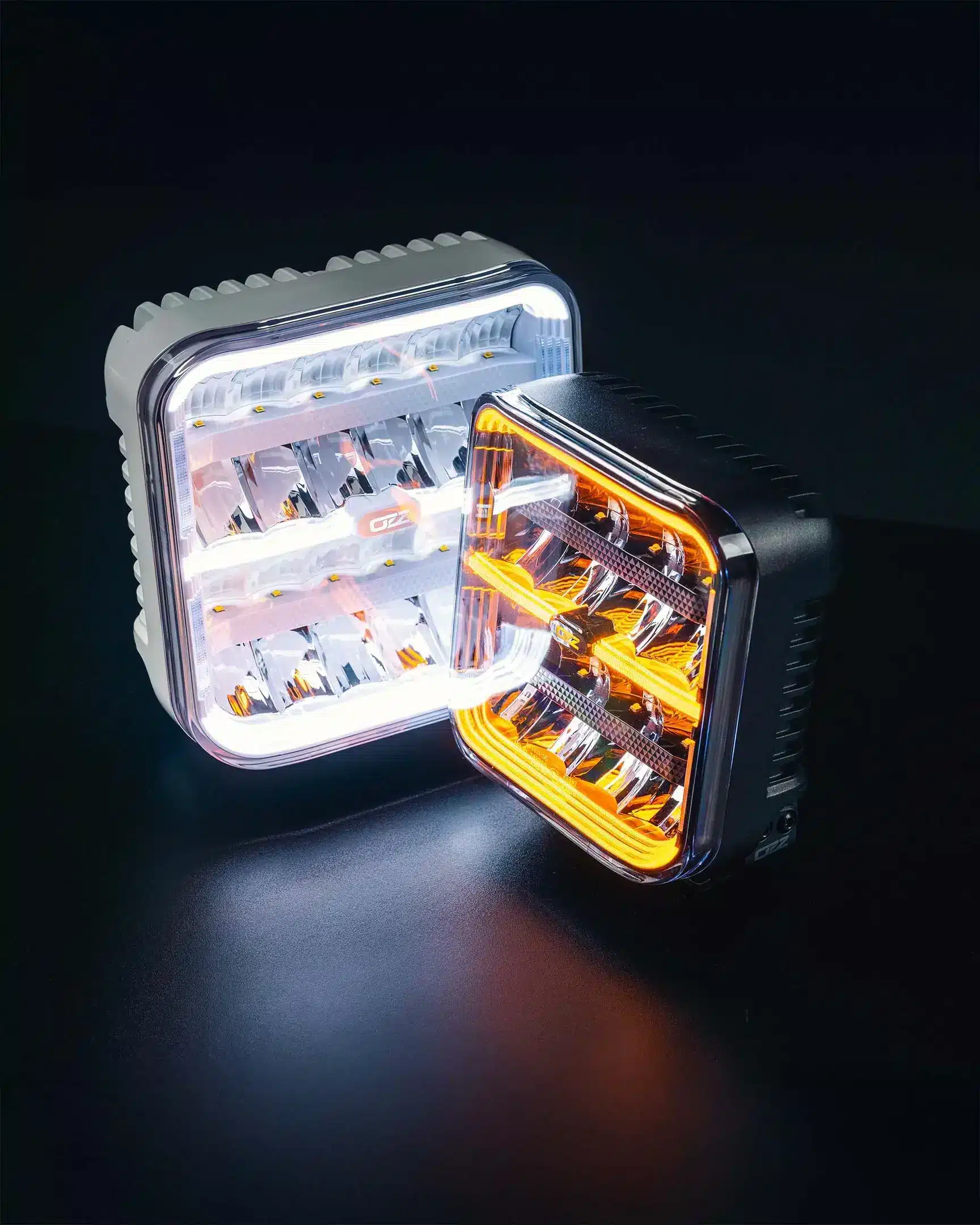
What we ship
Our standard catalogue runs at **5700K** — neutral-cool white, daylight-equivalent. This is the binning the human visual system reads as "alert white" without leaning into the eye-fatiguing blue end.
Where the customer asks specifically:
- **5000K neutral white** — slightly warmer, gentler on the eye for long-shift work-light applications. We special-order this binning on the OZZ work-lamp line. - **3000K warm yellow** — for fog / snow / rally use. Niche; we stock a small range from a Czech specialist supplier. - **Selective yellow (2900K)** — true rally yellow, hard to source. We can quote for specific projects.
Cheap "ice white" lamps marketed at 6500K+ are usually unsorted bins from low-quality factories. Avoid.
CRI — the other number that matters
Colour Rendering Index (CRI) measures how accurately a light source reveals the colours of objects compared to natural daylight. A CRI of 100 = perfect; below 70 = poor; below 50 = the lamp distorts colour visibly.
Most LED lamps for vehicles run CRI 70–80, which is fine for general visibility. Specialist applications (paint-shop floods, photographic-vehicle lighting, surgical mobile lighting) need CRI 90+, at a price premium.
We list CRI on the spec sheet of every lamp where the manufacturer publishes it. If a lamp doesn't have a CRI listed, assume it's somewhere in the 70–80 range — fine for most use, not fine if colour identification is part of the work.
If a customer needs to identify wire colours under a work-lamp, they need CRI 85+. The cheap LEDs make red look brown and brown look red.