
Technical guide
Wiring LED lighting on 24V commercial vehicles.
A lamp is only as compliant as the wiring that feeds it. This guide covers cable sizing, fuse selection, earth routing, and the three mistakes that account for roughly 80% of the retrofit callouts we see: undersized feeds, sharing a fuse with the wrong system, and grounding to the wrong chassis point.
Laatst bijgewerkt 24 april 2026
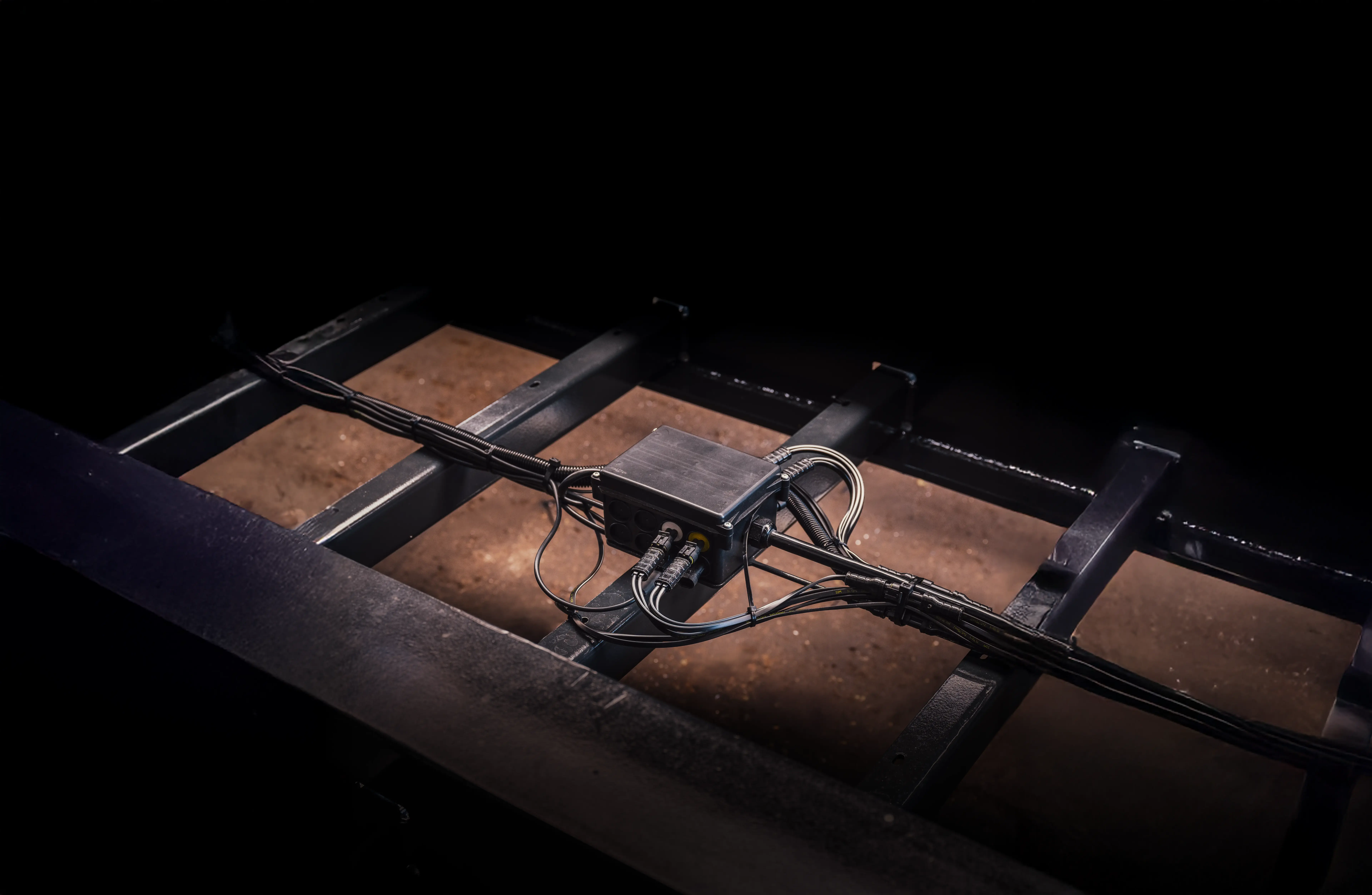
Cable sizing — the one rule that matters
Undersized cable is the number-one cause of retrofit lamp failure. A lamp that draws 3A at 24V will light perfectly well through 1 mm² cable — for the first six months. Then the cable heats, the insulation ages, voltage drops at the lamp's end, and the driver stage in the lamp starves of current.
Sizing rule for 24V auxiliary runs:
- **≤ 2A load**: 1 mm² minimum - **2 – 5A load**: 1.5 mm² minimum - **5 – 10A load**: 2.5 mm² minimum - **10 – 15A load**: 4 mm² minimum - **Over 15A**: step to 6 mm² and fit a relay rather than running the full current through the switch
All sizes are for runs up to 6 m. Longer runs step up one size per 5 m.
Fuses — one per circuit, one rating down
Every auxiliary load needs its own fuse. A shared 20A fuse feeding four separate lamps is a fire waiting to happen — if one lamp shorts internally, the other three are dragged down with it.
Fuse rating rule: pick the next standard fuse value above the total steady-state current. For a 5A load, fit a 7.5A fuse. For a 10A load, fit a 15A fuse. Never size the fuse to the cable's max rating; size it to the load.
Auxiliary fuse boxes built into modern trucks (MAN, DAF, Scania, Iveco — see the per-brand guides) have pre-rated positions. Use the matching rating. On older trucks without an auxiliary box, fit an inline waterproof fuse holder within 30 cm of the battery positive.
Every inch of unfused cable between the battery and the first fuse is a potential fire if the cable ever chafes through. 30 cm is the standard; don't stretch it.
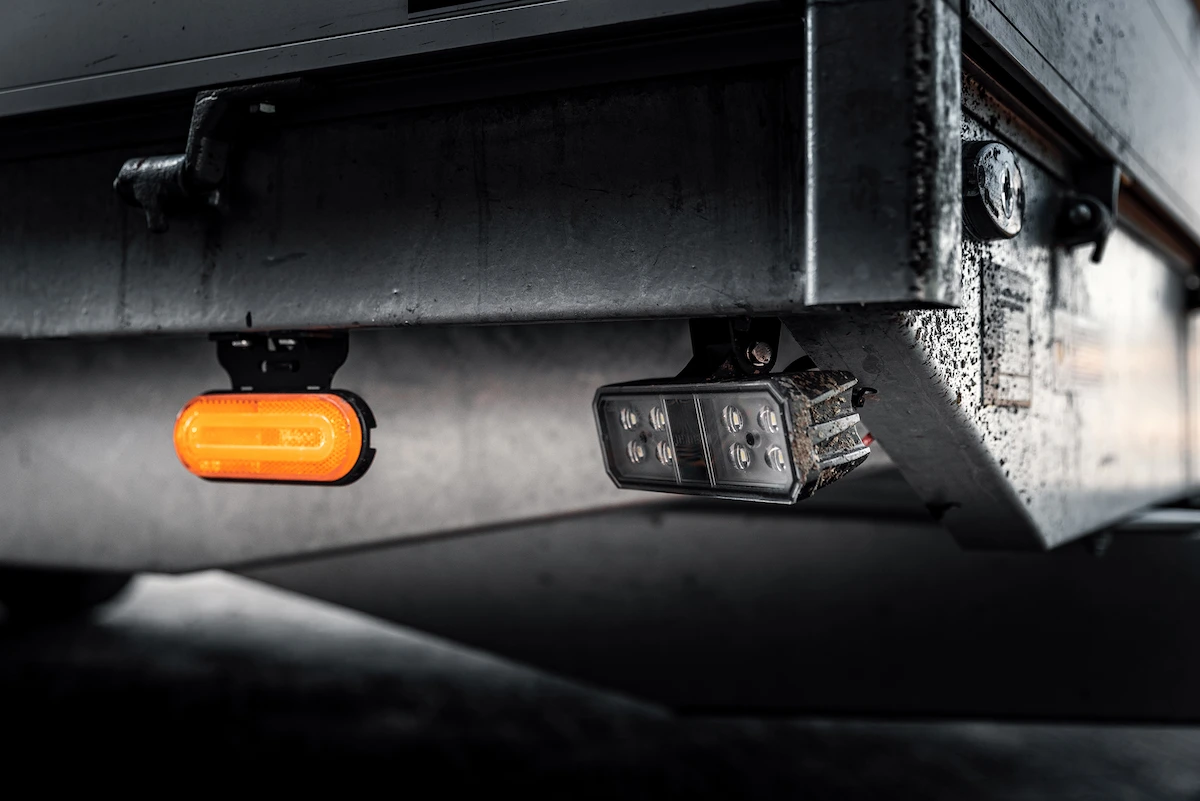
Earth routing — the mistake that causes CAN faults
An auxiliary lamp's ground return carries the same current as its positive feed. Earthing a lamp to the nearest convenient body panel (the cab wall, a bracket bolt) seems simple, but it routes high-current pulses through panels that also carry sensitive vehicle CAN signals.
The correct earth point is the vehicle's main chassis ground — usually a dedicated stud near the battery or next to the engine bay. For lamps mounted on the trailer, run the earth back to the trailer's main ground stud, not to a random chassis bolt.
Common symptom of a poor earth: the lamp works, but the dashboard throws intermittent "trailer light fault" or "CAN timeout" warnings. The fix is to run a dedicated 2.5 mm² earth back to the chassis ground, not an improvement of the lamp itself.
Connectors — seal them or skip them
Every crimped joint and splice is a future point of failure. In the humid/salty operating environment of a commercial vehicle, an exposed joint lasts two winters.
Three acceptable joint methods:
1. **Soldered and heat-shrunk** — reliable, slow to install, needs a heat gun 2. **Crimped with adhesive-lined heat-shrink butt splice** — fast, reliable, single-tool 3. **Waterproof connector pair** (Deutsch DTM, AMP SuperSeal 1.5) — expensive, fully field-repairable
NOT acceptable: scotch-locks, T-taps, bare crimps without heat-shrink, electrical tape. These fail within a year on any vehicle that sees rain.
We pre-fit the trailer connector and pigtail on every beacon we ship. That's not marketing — it's because a workshop crimp on a dry bench lasts longer than one done on a depot floor in November.
The relay question
Small lamps (up to 5A) can run directly from a switched ignition-positive feed. Larger lamps (above 5A) should run through a relay — the switch controls the relay coil, the relay controls the lamp.
Reasons: (1) dashboard switches are typically rated at 2–5A, not more. A direct 10A load cooks them. (2) a relay isolates the lamp's current surge from the ignition circuit, which matters for vehicles with sensitive electronics. (3) relays are field-replaceable; burnt-out switches in a dashboard are not.
A 40A SPDT relay with a 2-pin coil connector is the standard. Fit inside the cab where heat and moisture are lower than under the bonnet.