
ECE Regulation
ECE R87 — daytime running lamps.
DRLs became mandatory on new EU-registered vehicles in February 2011. R87 is the regulation they comply with. It specifies luminous intensity, colour, geometry and, critically, the switching logic — a DRL that fails to shut off under main-beam is as non-compliant as one that was never fitted.
Laatst bijgewerkt 24 april 2026
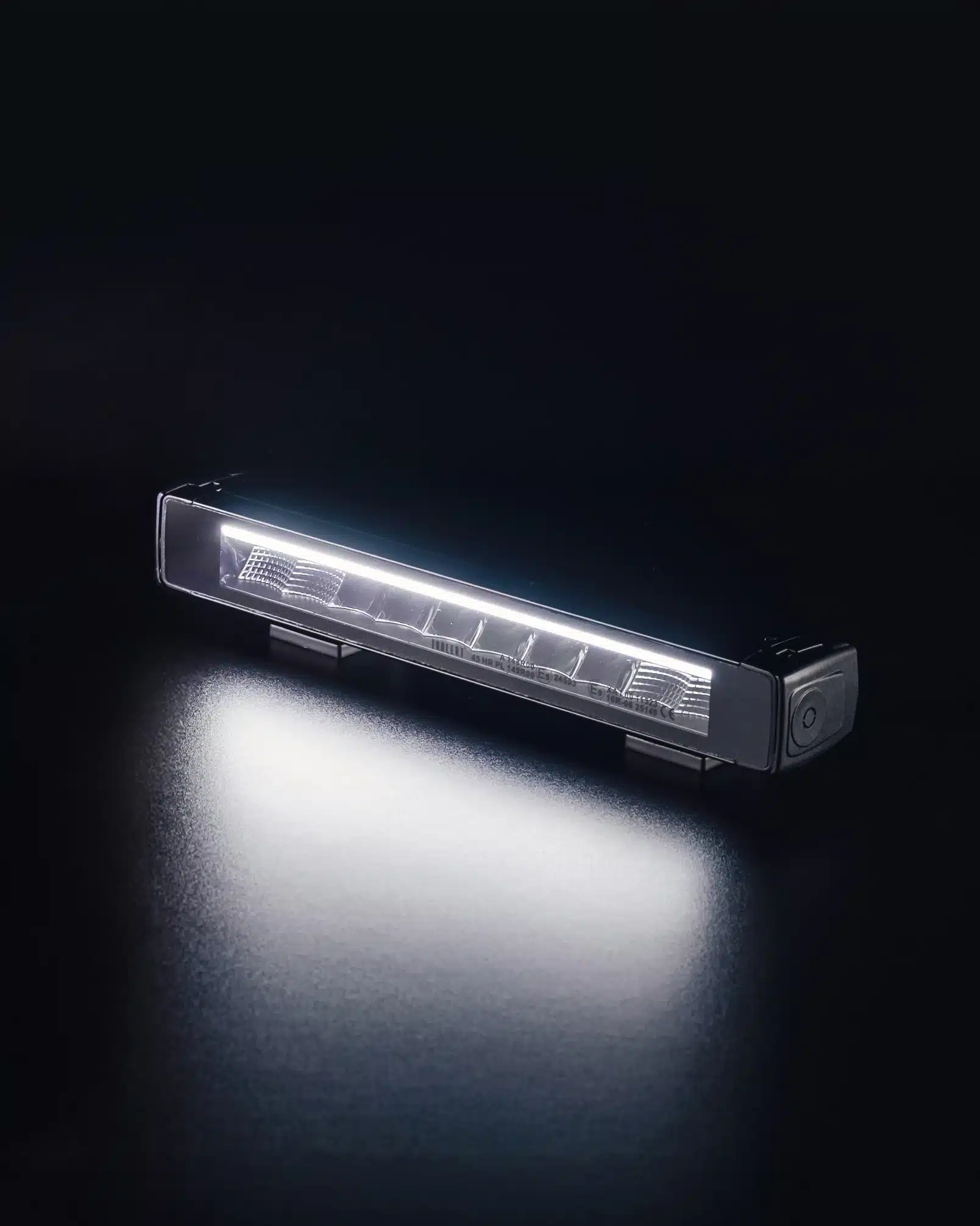
What a DRL actually is
A daytime running lamp is a forward-facing white lamp that switches on automatically with the ignition and switches off when dipped or main beam is active. It is not a low-beam headlamp; it's dimmer and wider in beam pattern, designed to make a vehicle visible in daylight rather than to illuminate the road ahead.
R87 specifies: white light output between 400 and 1200 candela, viewing angles of at least ±20° horizontally and ±10° vertically, and operation independent of headlamps.
The switching rule that catches retrofitters
R87 is strict about what DRLs must do:
1. Switch on automatically when the engine starts 2. Switch off automatically when the dipped/main-beam headlamps are switched on 3. Switch off when the vehicle's engine is off or the parking brake is engaged (this last rule is optional per national interpretation)
A retrofit DRL wired directly to ignition-positive without a headlamp-detect circuit will stay on during night driving, which blinds oncoming traffic and voids the lamp's R87 compliance at first inspection.
Wire the DRL into the fuse that feeds the side-light circuit via a relay controlled by the headlamp stalk. That one extra relay is the difference between compliant and a €230 spot fine.
LED vs. filament — why everyone went LED
LED DRLs took over the market within five years of R87 becoming mandatory. The reasons are practical:
- Filament DRLs use 20–25 W per lamp. LED equivalents run at 5–8 W. On a fleet vehicle that idles with DRLs on for several hours per day, the fuel saving adds up. - LEDs maintain full output from cold; filament lamps dim noticeably for the first 30 seconds. - LED lifespan matches the vehicle's service interval — typically no replacement needed in the life of the lamp. - The geometric freedom of LEDs lets OEMs do distinctive signature shapes, which sells.
Retrofitting DRLs on older vehicles
Vehicles first registered before February 2011 are not required to have DRLs. Retrofitting is permitted provided:
- The lamp is R87-approved (marked with an "RL" letter-pair) - It is mounted at the front, between 250 mm and 1500 mm from the ground - It is at least 600 mm from the vehicle's centreline - It switches per the rules above
A common mistake: fitting a bar of strip-LEDs to the front bumper and calling it a DRL. Unless each strip segment has an RL approval number, the installation is non-compliant.