
Vehicle guide · 4×4
Professional LED lighting for the Land Rover Defender.
The new Land Rover Defender (2020 onward L663 platform) is not the simple utilitarian chassis of its predecessor. A modern Defender runs a 48V mild-hybrid architecture, a dense CAN network, and OEM electronics that throw warnings at retrofit installs more readily than an old 90 did. That doesn't make LED lighting impossible — it means you buy lamps that know about modern Defenders.
Laatst bijgewerkt 24 april 2026
What the L663 platform brings
The current Defender's electrical architecture differs from the old (1983–2016) model in three ways that matter to installers:
- **48V mild-hybrid**: the main low-voltage bus is 12V, but a 48V sub-bus feeds the electric supercharger and active-roll systems. Accessory wiring stays on 12V; do not tap 48V. - **CAN-bus lamp monitoring**: the Defender throws "DRL fault" or "sidelight fault" warnings if LED replacements don't match the current profile of the original filament lamps. CAN-matching LED replacements are required. - **ECU-controlled fuse box**: the main body-control module assigns and reassigns fuse positions dynamically. "Dedicated auxiliary outputs" are fewer than on a G-Wagen or Land Cruiser. Factor this in before promising a 6-lamp install.
Mounting options
The L663 has a bolt-on accessory rail along the roof (on factory "Adventure" spec, aftermarket otherwise) that accepts M6 and M8 fasteners. A 42-inch LED bar fits cleanly along the rail without drilling the body.
Bull-bar mounting is constrained by the pedestrian-impact requirements of the front bumper — factory-approved bull bars (Expedition / Urban) have pre-threaded points; aftermarket bars that bolt to the chassis frame don't, and require type-approval to stay road-legal.
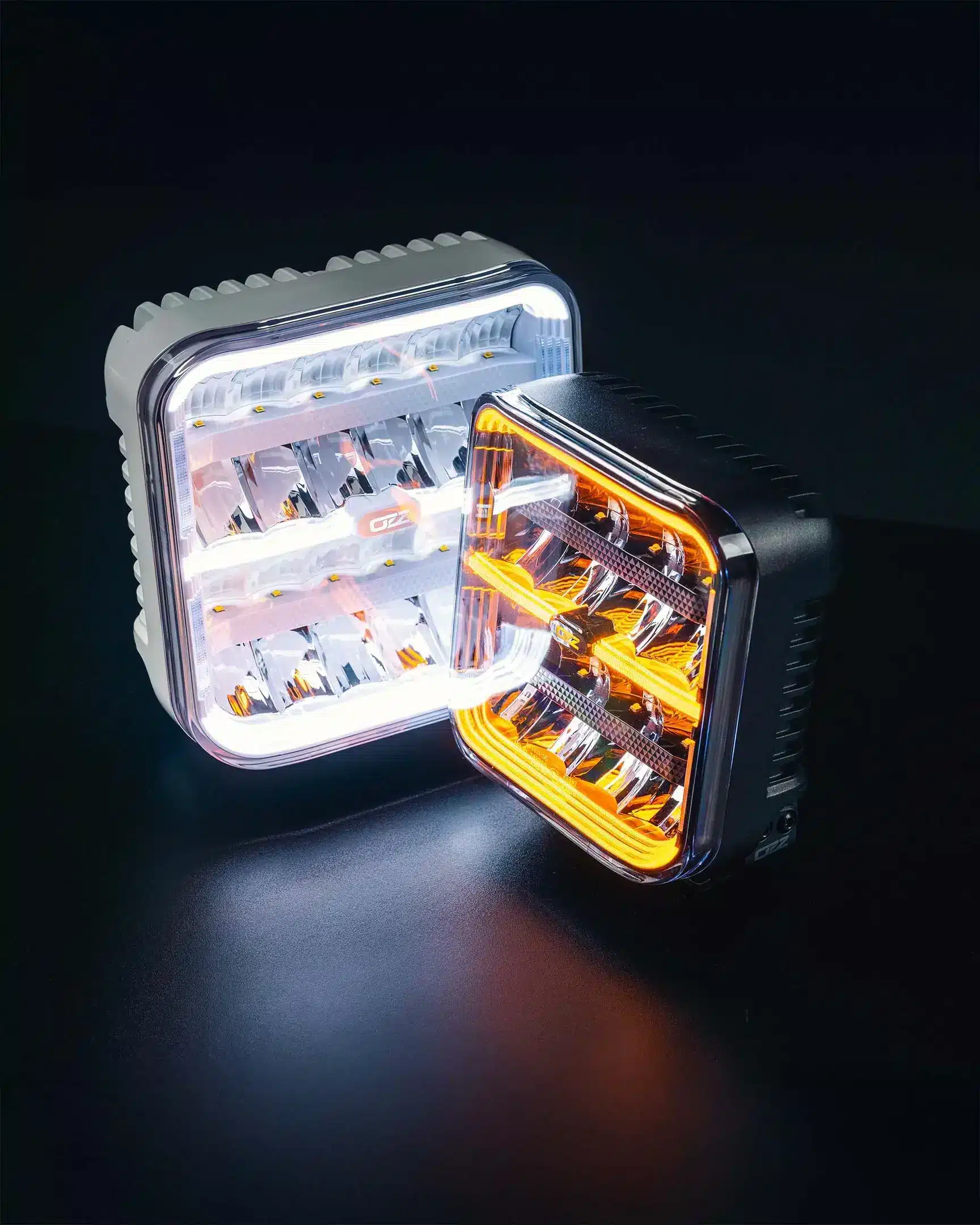
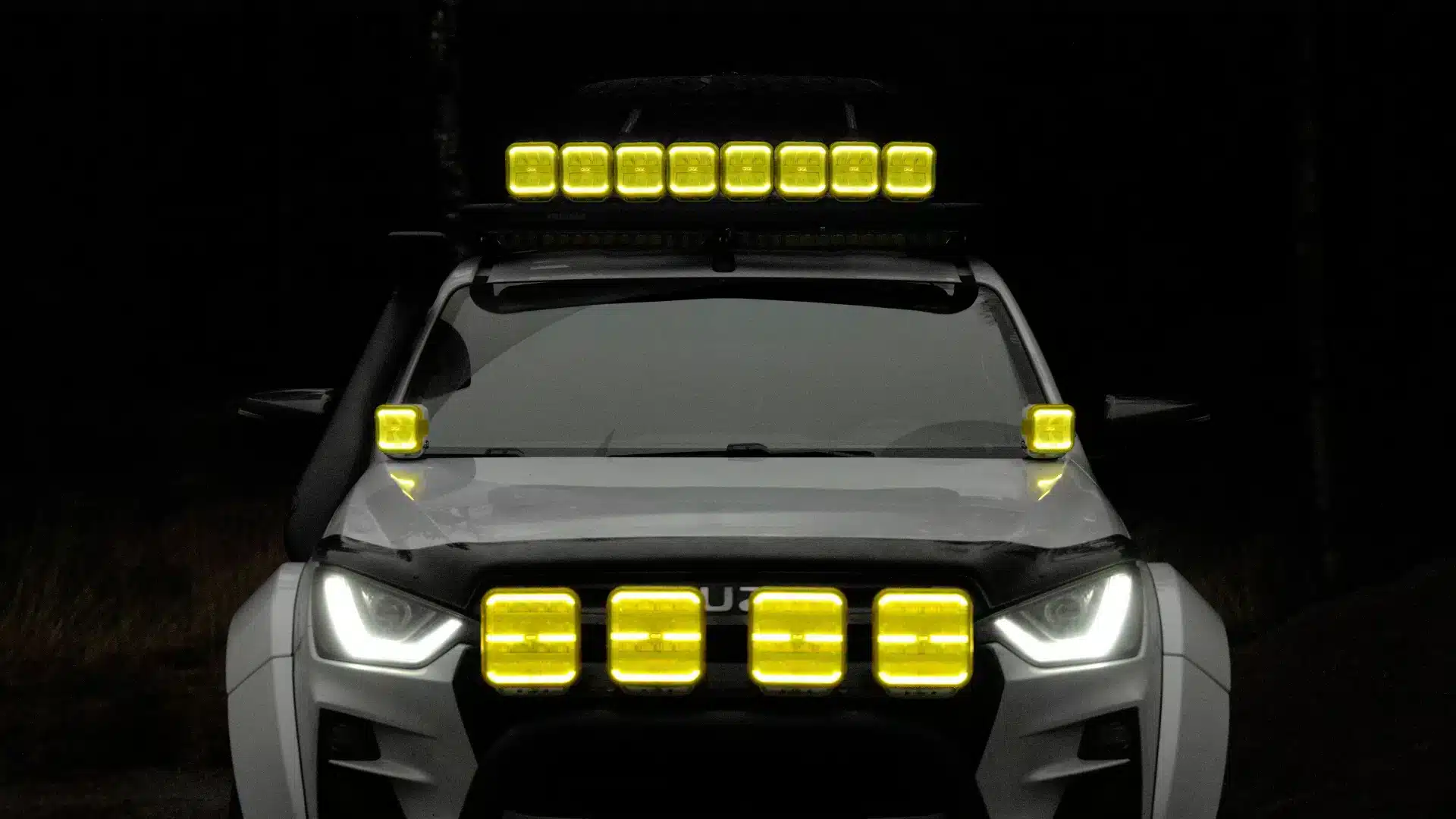
Auxiliary driving lamps (pencil-beam) paired with a wide-beam light bar remain the gold-standard off-road layout. We stock 7" round OZZ SQR and 9" round OZZ lamps that match the round-theme of the L663's signature design.
Off-road vs. on-road use
European road-legality is strict: auxiliary high-beam lamps must be switched off on public roads outside of permitted conditions (typically rural roads, night, no oncoming traffic). The Defender's electronic switching makes this easy — a properly-wired auxiliary bar activates only when main-beam is already on.
Off-road use is unrestricted, but the Defender's approach and departure angles are still the limit. Bolt a big bar to the lowest point of the bull-bar and you'll tear it off on the first proper descent. Mount higher, closer to the roofline, and you get more clearance at the cost of beam height.
The 12V power budget
A Defender's alternator supplies roughly 180A continuous. The factory electrical load (ECM, HVAC, infotainment, wipers, convenience systems) uses ~100A in normal use. That leaves ~80A headroom — plenty for an LED-based aftermarket install.
Rough budgets:
- Twin 6" driving lamps (LED): ~3A each = 6A - 22" LED light bar (120W): ~5A - Four cab-roof amber marker lamps: ~1A total - Rock lights and rear work lamps: ~3A combined
Total ~15A even for a thorough kit. The Defender handles that comfortably; older vehicles with weaker alternators would struggle.
Never run auxiliary lights directly from an ignition-switched wire on the Defender. The body-control module doesn't like it. Use a relay, take power from the battery positive, switch the relay from a switched source.