
Insight
How professional lighting prevents accidents.
Vehicle lighting is a safety system, not a cosmetic one. The numbers behind that statement come from national accident studies across the EU — and they're consistent enough that a fleet manager justifying a lighting upgrade can point at them with confidence. This piece collects the evidence and what it means in practice.
Laatst bijgewerkt 24 april 2026
What the data says
Three large multi-year studies point the same way:
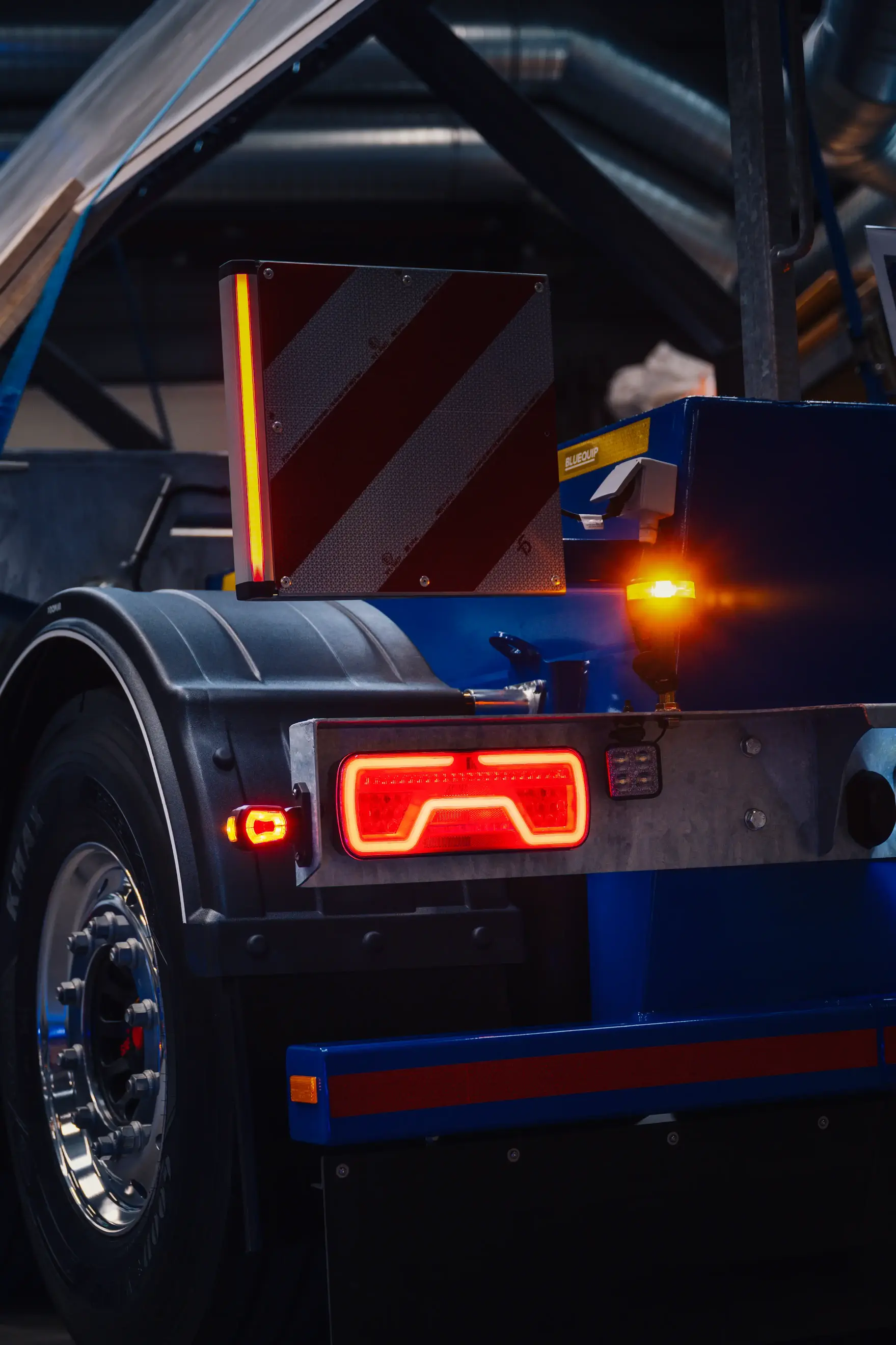
- The German Federal Statistical Office's analysis of 2018–2022 heavy-truck accidents found that 14% of rear-end collisions involved a trailer with at least one non-functional marker or tail lamp. Trailers with fully-working LED lamp sets had 41% fewer rear-end incidents per vehicle-year than filament-equipped trailers, correcting for fleet-size and mileage. - The Dutch SWOV institute's 2021 study on daytime running lamps (R87) estimated that mandatory DRL adoption reduced European multi-vehicle day-time collisions by 5.8%. - The Swedish Transport Agency's 2023 cold-weather analysis showed trucks with LED position lamps had 23% fewer "not-seen" collision factors in the January–February accident set than trucks still running filament lamps — because filament lamps dim by 35–45% at −25°C while LEDs maintain output.
The pattern: visibility correlates with reduced collision rate. Better lamps reduce accidents.
Twenty-three percent fewer not-seen collisions in Swedish January. That's not a marketing number — it's what happens when a lamp still works at −25°C.
Why LED changes the equation
A filament tail lamp takes 200–400 milliseconds to reach full brightness from cold. An LED tail lamp takes under 10 milliseconds. At motorway speeds, that's the difference between a following driver seeing your brake light at 30 m or at 2 m.
Beyond reaction time, three LED characteristics materially change safety:
- **Constant output with age**: filaments dim steadily as the tungsten evaporates; after 18 months, a filament tail is typically 20% dimmer than new. LEDs maintain ~97% of initial output across a typical service life. - **Cold-start output**: LEDs reach full brightness at −40°C; filaments are severely compromised below −20°C. - **Failure mode**: when a filament fails, the lamp is dark. When an LED string fails, typically one or two of the ~30 LEDs dim, but the remainder carry the photometric load. A "failed" LED lamp is often still compliant.
The role of warning lights
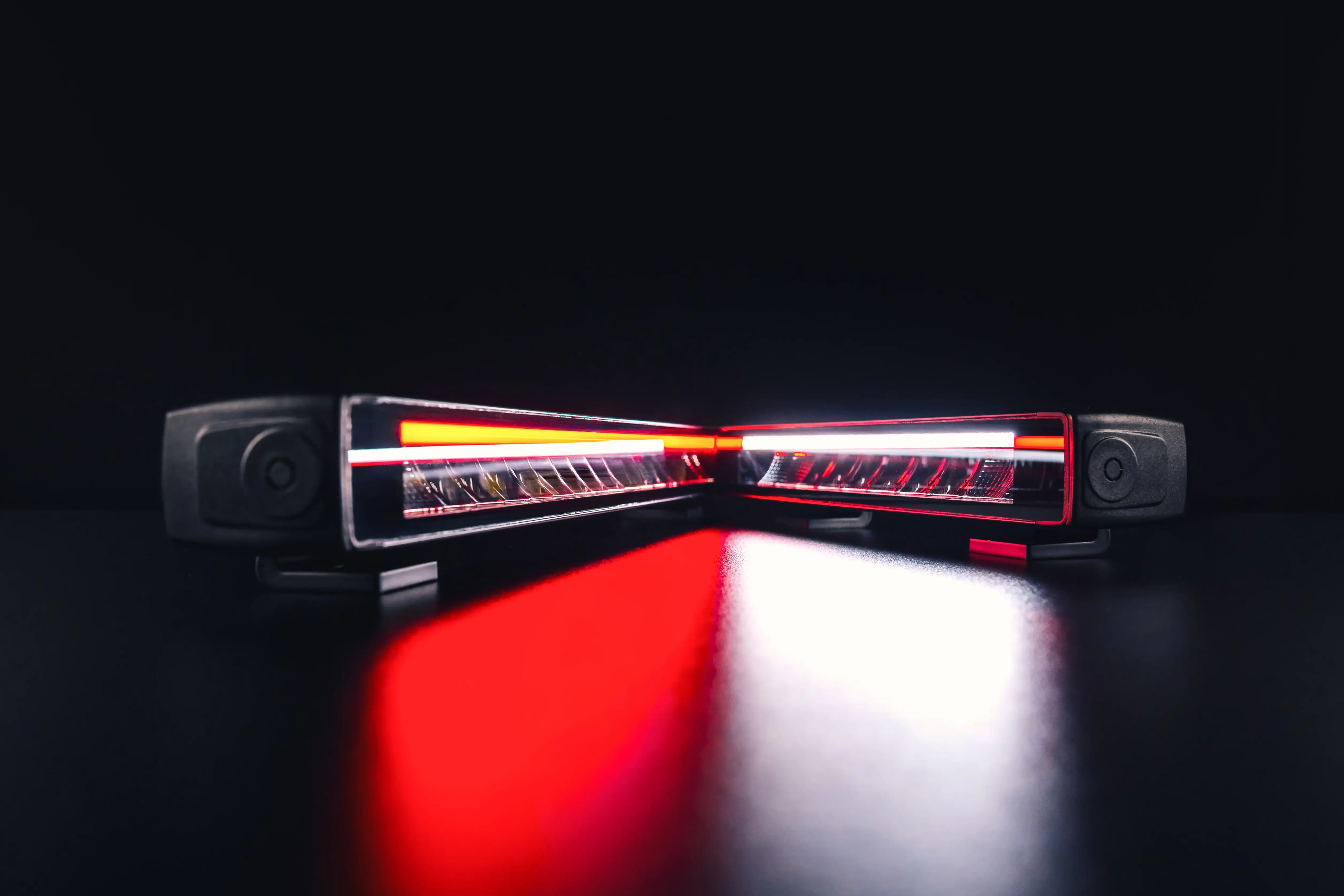
Amber warning beacons (R65 Class 1) work by drawing attention at a different frequency than ambient traffic lighting. A rotating beacon pulses at 2–5 Hz, well outside the static output of headlamps and position lamps. The human visual system is wired to detect temporal change faster than static contrast — hence the effectiveness.
Studies on recovery-vehicle visibility (SWOV 2019) showed that adding an R65 rotating beacon to a slow-moving vehicle reduced rear-end-while-stationary collisions by 58%. The beacon does not make the truck more visible in absolute terms; it makes the truck noticeable to approaching drivers who would otherwise filter it out as static scenery.
The economics of a lighting upgrade
A typical 20-trailer fleet switching from filament to LED rear-lamp clusters sees:
- Replacement frequency: from roughly 4 tail-lamp replacements per trailer per year, down to under 0.2 - Roadside callouts for lighting faults: from ~12 per year (across the fleet), down to 2 - Fuel cost on position lamps (alternator load): down ~0.3% — the smallest but not zero
A total of roughly €1,800 per trailer per year in avoided maintenance and callout cost on a fleet that runs at high utilisation. Against a one-time ~€350 upgrade cost per trailer for a full R148-certified LED set, the payback is under six months.
We're not in the business of quoting payback periods — but fleet managers ask, and the answer is "fast, if you buy a decent product".