
Vehicle category · AGRI WERKTUIG Verlichting
Agricultural implement lighting — ploughs, balers, sprayers.
Towed and mounted agricultural implements (ploughs, harrows, seeders, balers, sprayers, fertiliser spreaders, slurry tankers) need their own lighting set when used on public roads. The rules are straightforward — same R7 / R148 standards as a small trailer — but the mounting environment is brutal, with constant exposure to soil, fertiliser, slurry, salt and impact damage from field debris.
Laatst bijgewerkt 24 april 2026
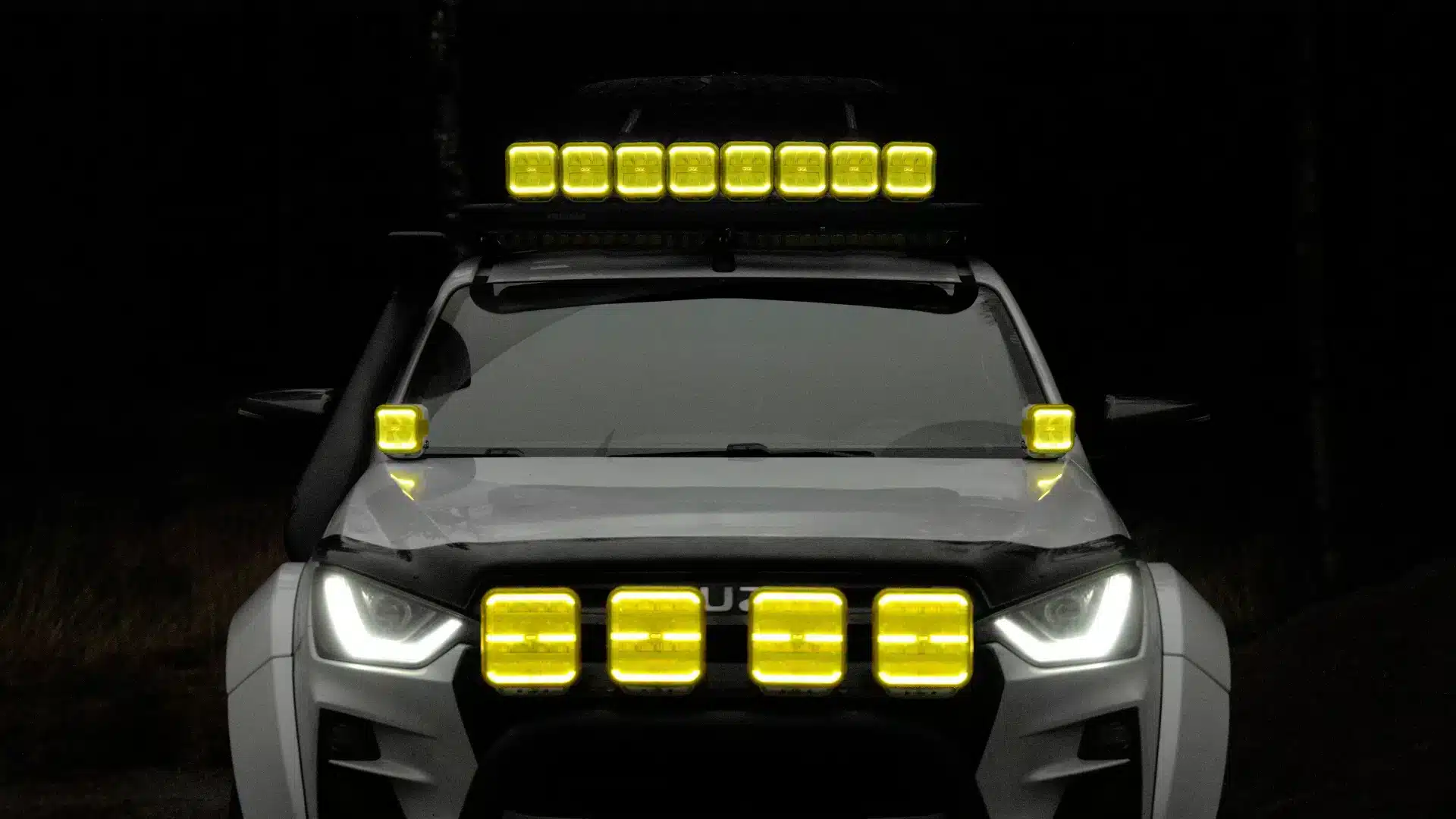
When implements need their own lighting
Any implement towed on a public road, or mounted on a tractor in a way that obscures the tractor's own lighting, must carry its own R7-approved position lamps, stop lamps and indicators. The exact rule varies between EU countries (Germany applies StVZO §53; Netherlands applies RVV1990; France applies arrêté du 4 mai 2006) but the photometric and mounting requirements are harmonised.
In practice, anything wider than the tractor (most implements above 2.55 m) needs amber side-marker lamps and corner-marker lamps before it leaves the field gate.
Mounting realities
Implement frames are not friendly to lamps. They flex, they get hit by stones thrown up by adjacent wheels, they're sprayed with high-pressure water at end-of-day cleaning, and on occasion they're driven through brambles.
The lamp specs that survive:
- IP69K (jet-washing at 80°C with 100 bar) - Protected lens (polycarbonate over glass; the polycarbonate flexes rather than shattering) - Recessed mounting (lens behind the implement frame edge, not proud) - Short-cable termination with sealed inline connector close to the lamp
Lamps mounted proud of the implement frame have a service life measured in months on a busy farm. Lamps recessed and protected last the operational life of the implement.
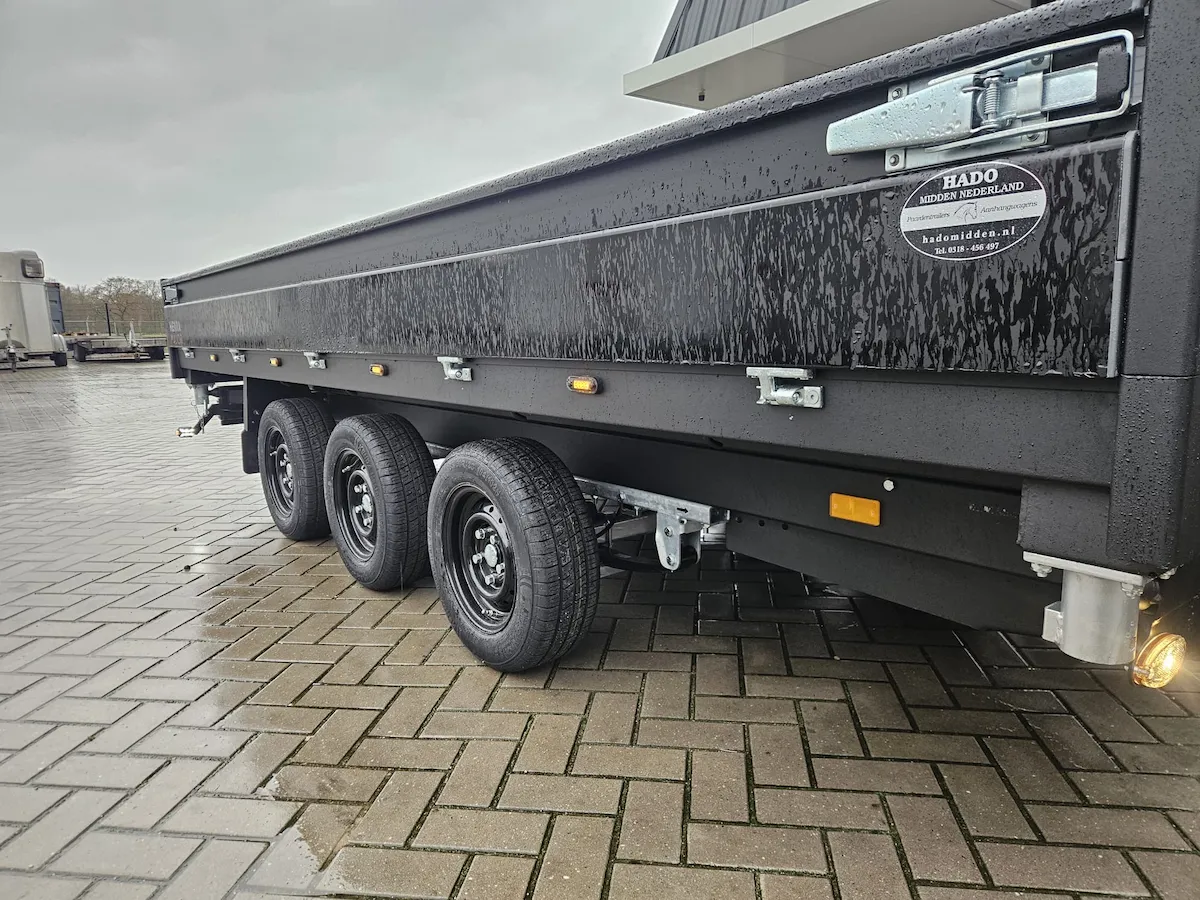
Wiring an implement
Agricultural implements typically connect to the tractor through a 7-pin ISO 1724 connector at the rear (some modern implements use 13-pin ISO 11446). The pin-out is identical to a passenger-car trailer connector.
Two installer pitfalls:
1. **Combined indicator + position circuit**. Some legacy implements wire the indicator and the position lamp on the same circuit; modern LEDs draw too little current to make the tractor's flasher relay cycle, and the indicator either stays on or doesn't flash at all. Solution: a dedicated LED-compatible flasher relay on the tractor side.
2. **Magnetic-mount add-ons**. Wide-load corner lamps fitted on a magnetic mount for occasional duty work fine — but the cable from a magnetic lamp to the tractor connector is exposed and gets caught on field debris. Use coiled cables and a strain-relief mount on the implement.
An implement lamp that survives one harvest will survive the next. The ones that fail in week three of a five-week harvest tell you something about the spec.
Slurry, fertiliser, salt — the chemistry
Liquid fertiliser, slurry and ice-clearing salt are aggressive. Lamp housings made of the wrong plastic age within a season; lamp gaskets made of the wrong rubber swell and leak.
Look for housings declared as polyamide or PA-GF (glass-filled nylon) and gaskets declared as silicone or EPDM. Avoid PVC housings or generic "rubber" gaskets — they're the budget brands' route to a low price. We don't sell them.