
Vehicle guide · Trucks
Professional LED lighting for Scania trucks.
Scania's R, S, P, G and L ranges share a single cab platform with consistent mounting points and a 24V CAN architecture that's been largely unchanged since the 2016 NGS (New Generation Scania) redesign. Fitting aftermarket lighting to a modern Scania is mostly predictable — the electrical system is well-documented, the roof rails are standard, and the LIN/CAN gateway tolerates aftermarket loads better than most.
Laatst bijgewerkt 24 april 2026
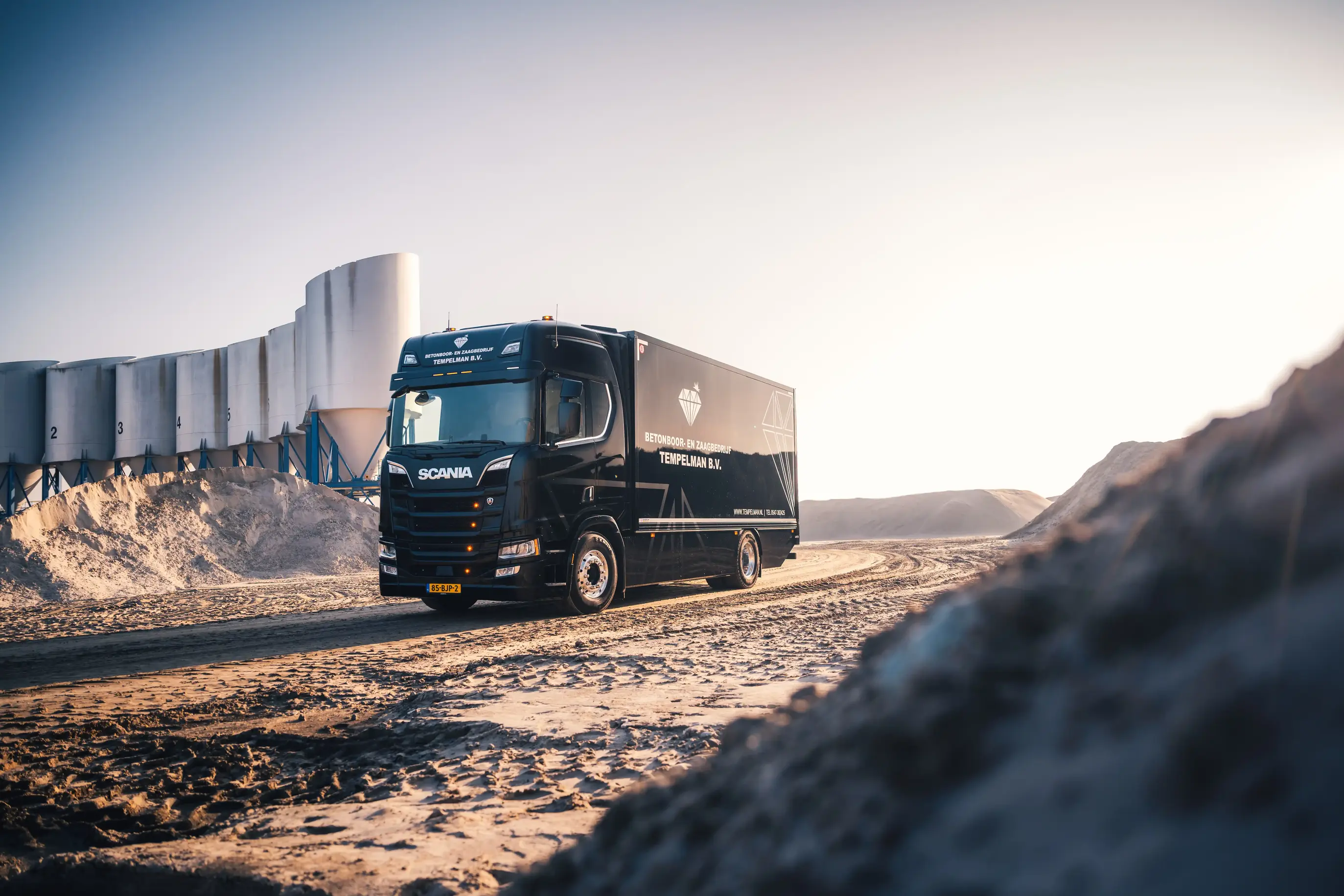
The Scania range by cab
The **R** is the flagship long-haul tractor — big Highline or Topline sleeper, aerodynamic bodywork, fitted to 80% of the continental distribution fleets. Roof-bar mounting points are pre-threaded on the Highline; Topline cabs sit too high for conventional light-bar kits and usually take integrated-beacon variants instead.
The **S** is the next-generation flat-floor long-haul variant — room for a proper bunk and a higher windscreen. Electrical architecture is identical to the R, but the extra roof height means a 200mm drop-down bar clears the cab profile more cleanly.
The **P** range is the construction and distribution workhorse — day cab or short sleeper, 4×2 to 8×4. Shorter chassis, more vibration, so IP69K-rated lighting pays off here more than on the R/S.
The **G** is the mid-range all-rounder, and **L** is the urban low-cab. Both share the same 24V auxiliary fuse block layout: eight free auxiliary outputs, each 10A-rated, accessible from the passenger footwell panel.
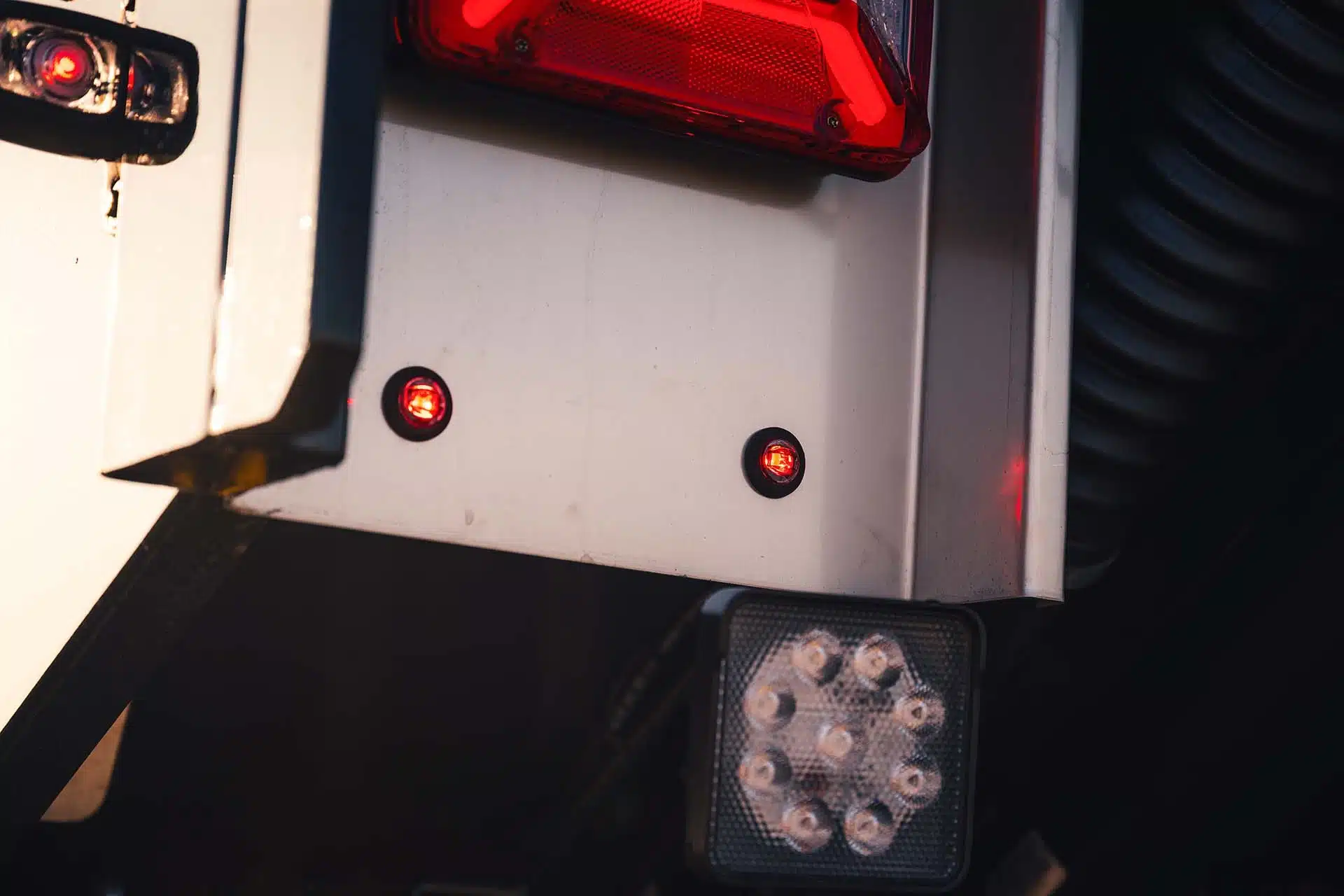
CAN-bus behaviour and LED rear lamps
Scania trucks from 2018 onward monitor rear-lamp current via the LIN slave in the trailer-ECU. An LED rear lamp without built-in CAN-matching will trigger a "rear-light failure" dashboard warning — the same alert you'd get with a blown filament bulb.
Two ways around this: buy LED rear lamps with internal CAN-matching resistors (they draw a small bleed current that mimics a filament lamp) or fit an inline canceller at the lamp feed. We prefer the former; fewer parts, fewer potential failures.
Factory mounting and pre-drilled points
Scania's roof-bar accessories are well thought out. Every NGS cab leaves the factory with:
- Two M8 mounting bolts on the roof front edge, 800mm apart — standard for a 22-inch light bar - Four M6 threaded inserts across the sun-visor spar for amber marker lamps - A trunked 4-way auxiliary loom running from cab to trailer connector, pre-fused at 15A per lane
For a fitter, this means a typical beacon-plus-work-lights install on an R-series needs no drilling and no custom wiring. Tape the looms into the existing trunks, terminate into the factory fuse block, done.
The cold-weather angle
Scania is big in Scandinavia, which matters for lamp choice. A lamp rated "operating temperature −20°C" will work in most European winters but will fail at Kiruna in January. For customers running Norway/Sweden/Finland, the spec to look for is "−40°C cold-start tested" — not just stored at that temperature, but able to reach full photometric output within 30 seconds of switch-on.
Our Stratos light bars and OZZ work lamps are tested to −40°C cold-start. Budget-brand LED strips often specify only "storage temperature −20°C", which is not the same thing at all.
A truck on a Norwegian night doesn't care that your lamp is "rated for cold climates". It cares that the LEDs are still drawing current when you turn the key at −38°C.