
Vehicle category · Blauwlicht Verlichting
Emergency-services lighting — police, fire, ambulance.
Blue-light vehicles operate under stricter rules than any other category on European roads. The lamps themselves carry ECE R65 Class 2 approval (higher photometric output than the amber Class 1 used on service vehicles), the colour is permitted only on duty-authorised vehicles, and the operational use is regulated separately by national emergency-services law. This page covers the spec, the rules, and what we sell into the segment.
Laatst bijgewerkt 24 april 2026
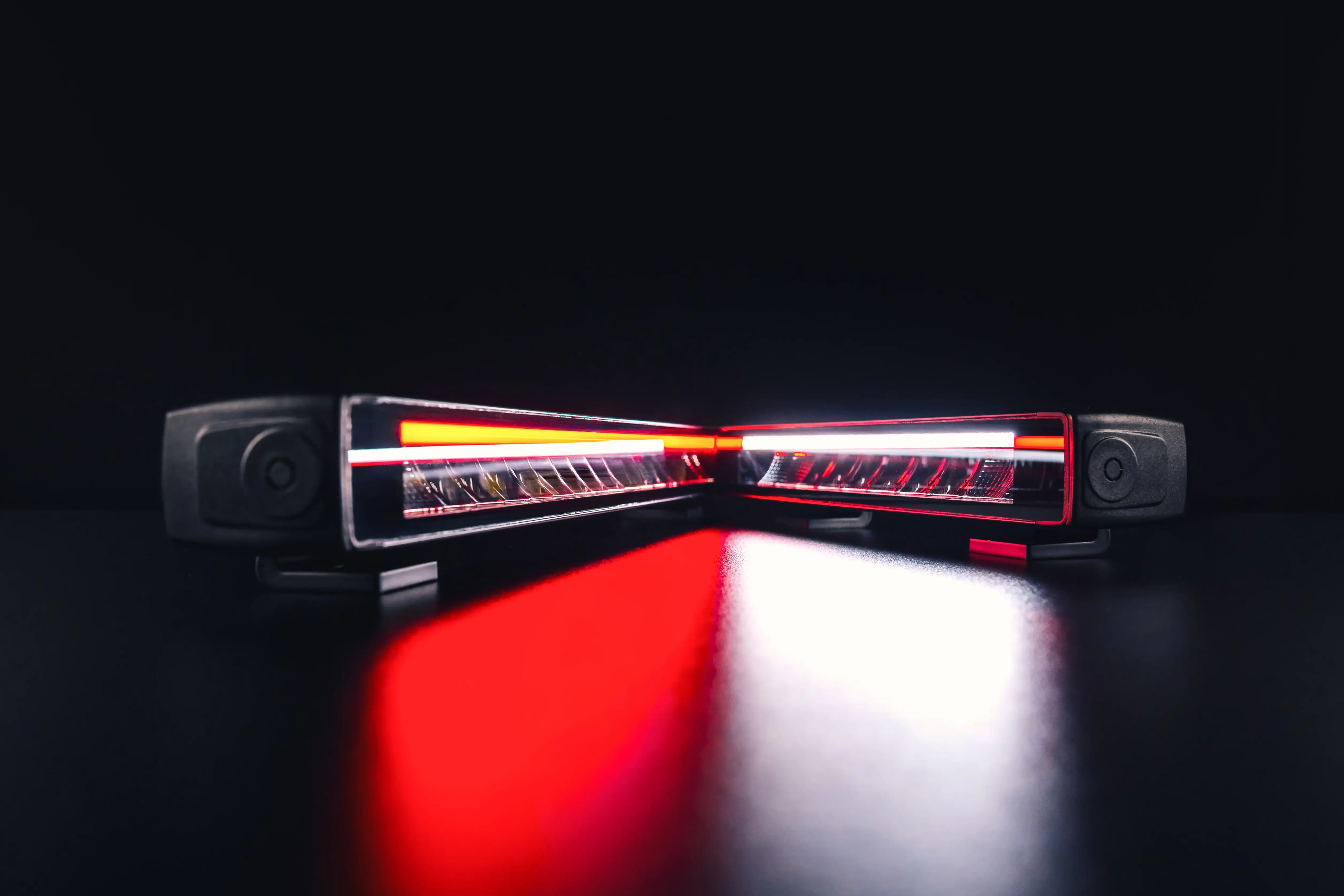
The colour rules — by country
**Blue** is reserved for police, fire and ambulance services across all UNECE member states. National rules add subtleties: in the Netherlands and Germany, civil emergency services (mountain rescue, lifeboat) qualify; in France and Italy, the categories are tighter.
**Green** is used for incident-command vehicles at an active scene, often in a unique pattern (slow rotate vs. the rapid flash of blue) to signal "command, not response".
**Red** is permitted on a narrow set of fire-brigade and military-intervention vehicles in some countries. Spanish and Portuguese rules differ from northern European norms.
**Amber** is the universal "caution" colour and not restricted to specific services — anyone with a duty reason (recovery, road maintenance, slow vehicle) can fit it. Most of our beacon catalogue is amber.
The lamp's R65 approval covers the optics. The user's authorisation to operate it covers the colour. The two are separate; an R65 Class 2 blue lamp fitted to an unauthorised vehicle is illegal regardless of the lamp's compliance.
Class 1 vs. Class 2
R65 has two duty classes:
**Class 1**: amber service-vehicle beacons. Lower photometric output, lower minimum flash rate. Suits recovery, road-works, agricultural, slow-vehicle visibility.
**Class 2**: emergency-vehicle beacons. Higher minimum output, faster flash rate, stricter immunity to vibration and temperature cycling. Required on police, fire, ambulance.
A Class 2 beacon can be fitted on a Class 1 application (more output than needed, but compliant). A Class 1 beacon CANNOT be fitted on a Class 2 application — it won't meet the minimum-output requirement and would fail vehicle inspection.
What we stock for the segment
Our emergency-vehicle catalogue is curated, not comprehensive. We carry:
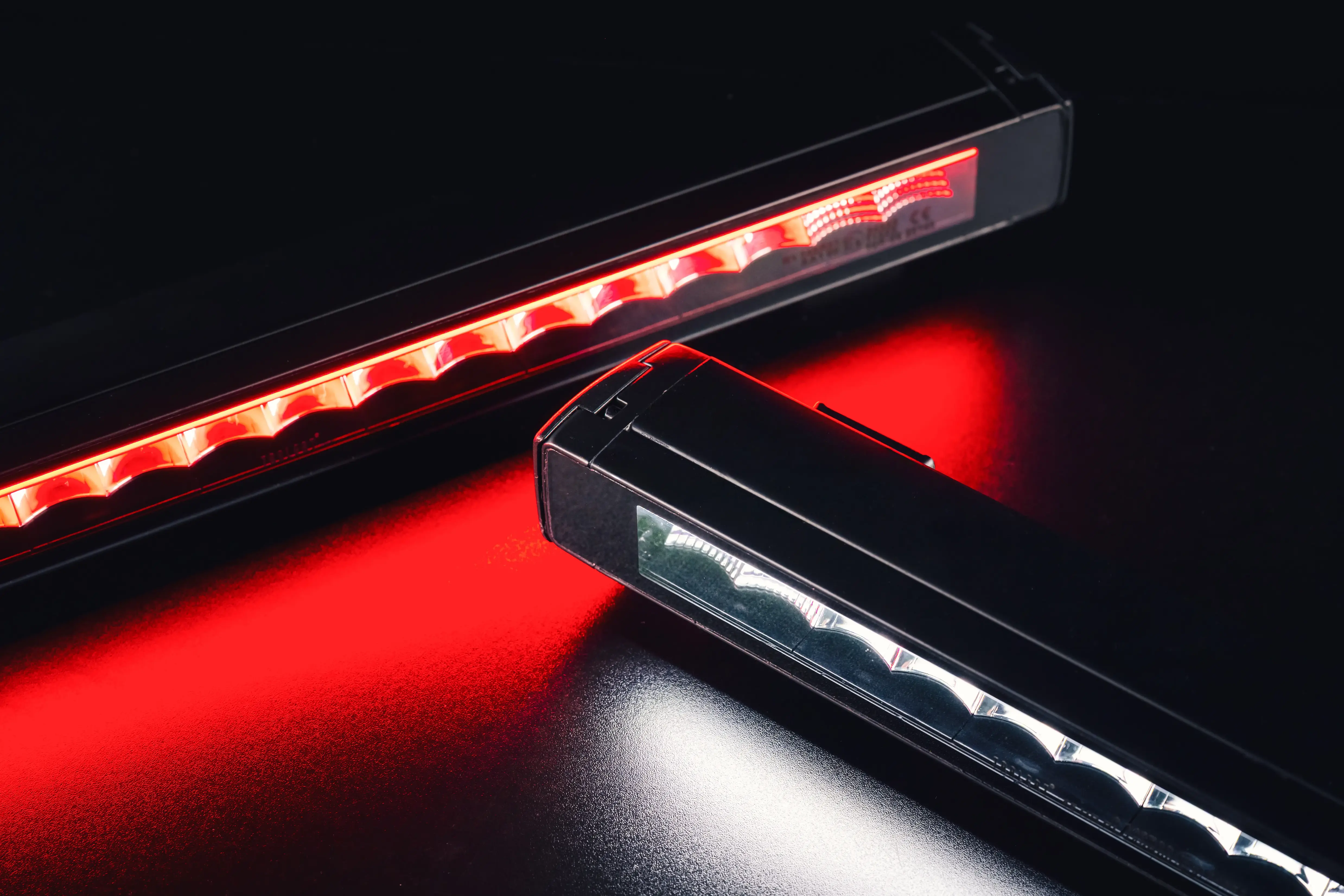
- **Single magnetic-mount beacons** for unmarked patrol cars and command vehicles - **DIN-pole beacons** for fixed-mount on cab roofs - **Full warning-light bars** (40", 50", 60") for marked patrol and incident-command vehicles - **Cab-front directional warning lights** (R65 Class 2) for grille-recess installation - **Rear stop / brake / amber-pattern** combination lamps for incident closure
We don't carry siren systems or comms equipment — those are a separate supply chain. For full vehicle conversion (cars and vans into police-spec, fire-spec or ambulance-spec) we work alongside the dedicated up-fitters.
The "covert" market
A growing segment of emergency-vehicle lighting is "covert" — low-profile, hidden in the OEM headlamp cluster or behind the grille, lit only when needed. Unmarked police, plain-clothes investigation, undercover narcotics units.
The technology behind covert lighting is no different from regular R65 — the same LEDs, the same flash patterns, the same approval marks. The trick is mounting: replacing factory headlamp inserts with hybrid units that retain the OEM dipped-beam function but add covert blue/red strobes that activate only on demand.
We can source these to order. They're not on the public catalogue — sales go through agency-verified channels only.
Covert lighting is sold against credentials, not against price. If you're not the named officer at the named force, we don't sell.